Q & A with Nigel Barratt
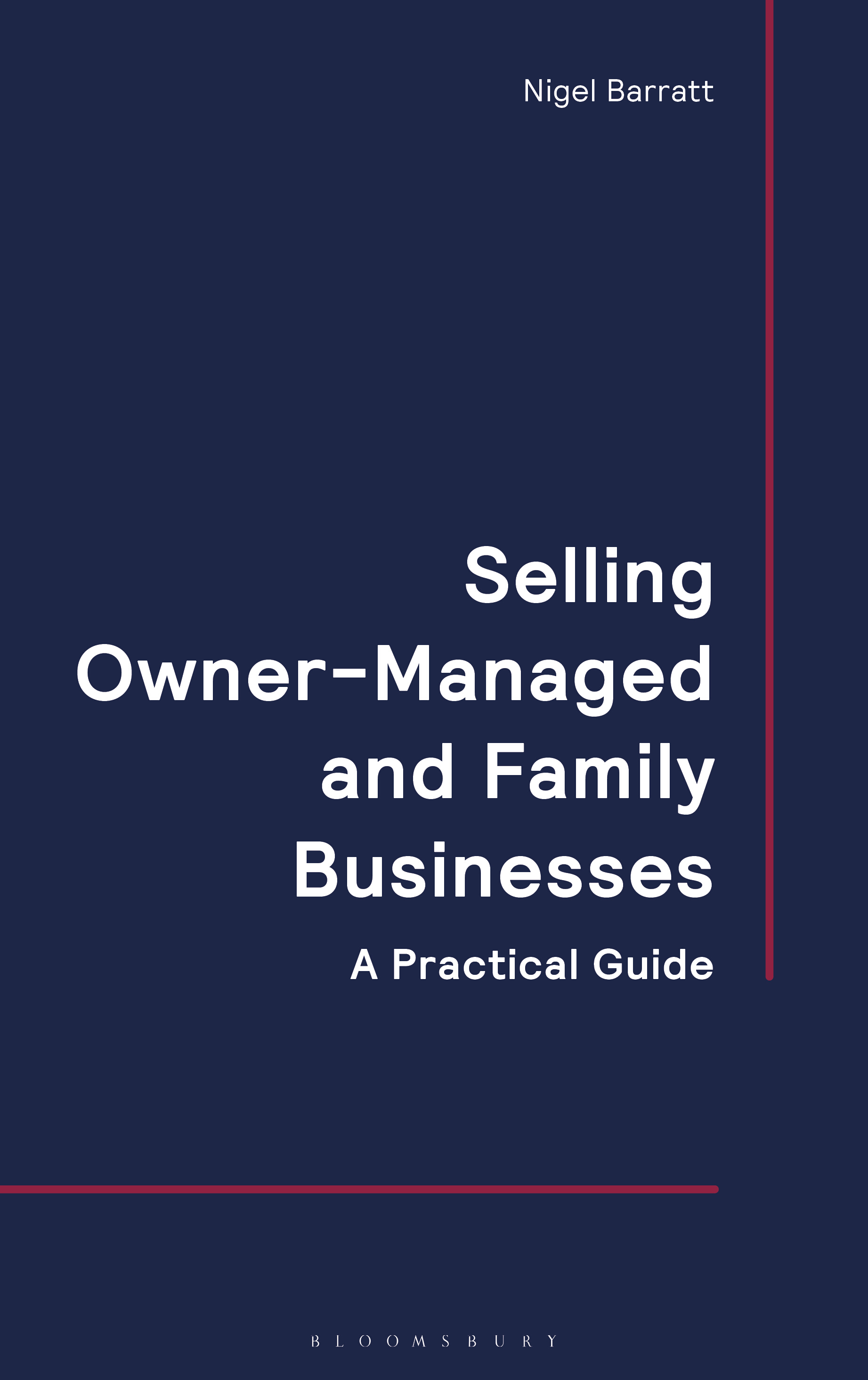
Nigel Barratt is the author of the new title of Selling Owner-Managed and Family Businesses - A Practical Guide.
This will be included in our Company and Commercial Law service.
Who should read Selling Owner-Managed and Family Businesses – A Practical Guide?
My book is aimed primarily at M&A advisers in the early stages of their careers, but also for other professionals who have an involvement in M&A processes. I also hope that business owners contemplating a business sale will find the book useful.
Are there any trends in selling owner-managed or family businesses that practitioners should be aware of?
The most conspicuous recent trend for me is the increasing number of transactions that result from owners being directly approached by buyers. With intense competition amongst buyers for good quality acquisitions, buyers are no longer waiting to be approached by sellers, they are actively trying to find opportunities. I explain in the book that this phenomenon, generally referred to as ‘deal origination’ is growing, particularly amongst private equity investors.
From an adviser’s perspective, this trend is double edged as it creates transactions to work on, but it brings challenges as the selling business is often not ‘sale ready’, which can make the transaction really challenging in terms of diligence.
However, as I say in the book, if a business owner is approached in this way it can also be an opportunity to secure a great deal and therefore advisers should be encouraging those business owners likely to contemplate a future business sale to always be ‘sale ready’.
Are there any developments you foresee having an impact on this area over the next five years?
As with every sector of the economy, the big unknown is the impact that AI will have on the sector. Undoubtedly, AI will drive efficiencies into deal-making, in particular with document production, information collation and review.
My concern with AI is that advisers and business owners will over rely on it and therefore fail to recognise that every transaction is different and is the result of multiple judgements, problem solving and complex negotiations to find acceptable outcomes both financial and non-financial. Therefore, I believe there will still be a requirement for experienced professionals.
What is the most challenging aspect of working in this area?
It’s probably no coincidence that alongside a nearly forty-year career in mergers and acquisitions, I am a fan of endurance sports.
Completing a private company transaction is a marathon, not a sprint.
For an owner manged business to get to the start line in good shape, preparation is often required. Persuading business owners to make the required investment in planning is always a key challenge.
Sellers also find the final stretch with due diligence and legal documentation difficult and tiring so the support of an experienced adviser is vital at this stage.
However, the biggest challenge occurs halfway through the marathon when a buyer is identified and the terms of the transaction are agreed. Agreeing the terms of a transaction requires a mix of negotiation skills, attention to detail, creativity and persuasion to achieve a number of objectives both financial and non-financial not just for your client but also for the buyer. While challenging its undoubtedly the most exciting and enjoyable aspect of the role.